

An interview with Ian Margo, Alexandre Montserrat and Elena Carbajal of biānjiè.systems
Josh Yakov sits down with the curators of this year's famed art-tech conference 7x7 at New Museum


Josh Yakov is a technologist, connector, former chef at Blue Hill at Stone Barns, and has worked across Tribute Labs, Nguyen Wahed, and ARTXCODE. He moves between food, art and tech in a way that makes him one of the better people to walk you through an event like this. We asked him to cover 7x7 for us.
7 x 7 is one of the most important events on New York’s art-tech calendar. Hosted by Rhizome at The New Museum this Saturday (May 16th), the format is simple: seven artists are paired with seven technologists to develop new collaborative works. The results are presented live. No panels. No keynotes. Just new work made in real time.
The event has a track record of producing things that mattered long before anyone realized it. Ryan Trecartin and David Karp (2010) made work that foreshadowed short-form video on social media. Taryn Simon and the late Aaron Swartz (2012) built Image Atlas, a universal visual language project. Kevin McCoy and Anil Dash (2014) presented Monetized Graphics, which kicked off the entire NFT and owned media economy years before anyone was using that language.
This year’s edition is being curated in part by biānjiè.systems, a research-driven platform for editorial production, curation and artistic practice based out of Europe, alongside Rhizome and the artist Neema Githere. I sat down with the core team, Ian Margo, Alexandre Montserrat and Elena Carbajal, to learn what they had in store.
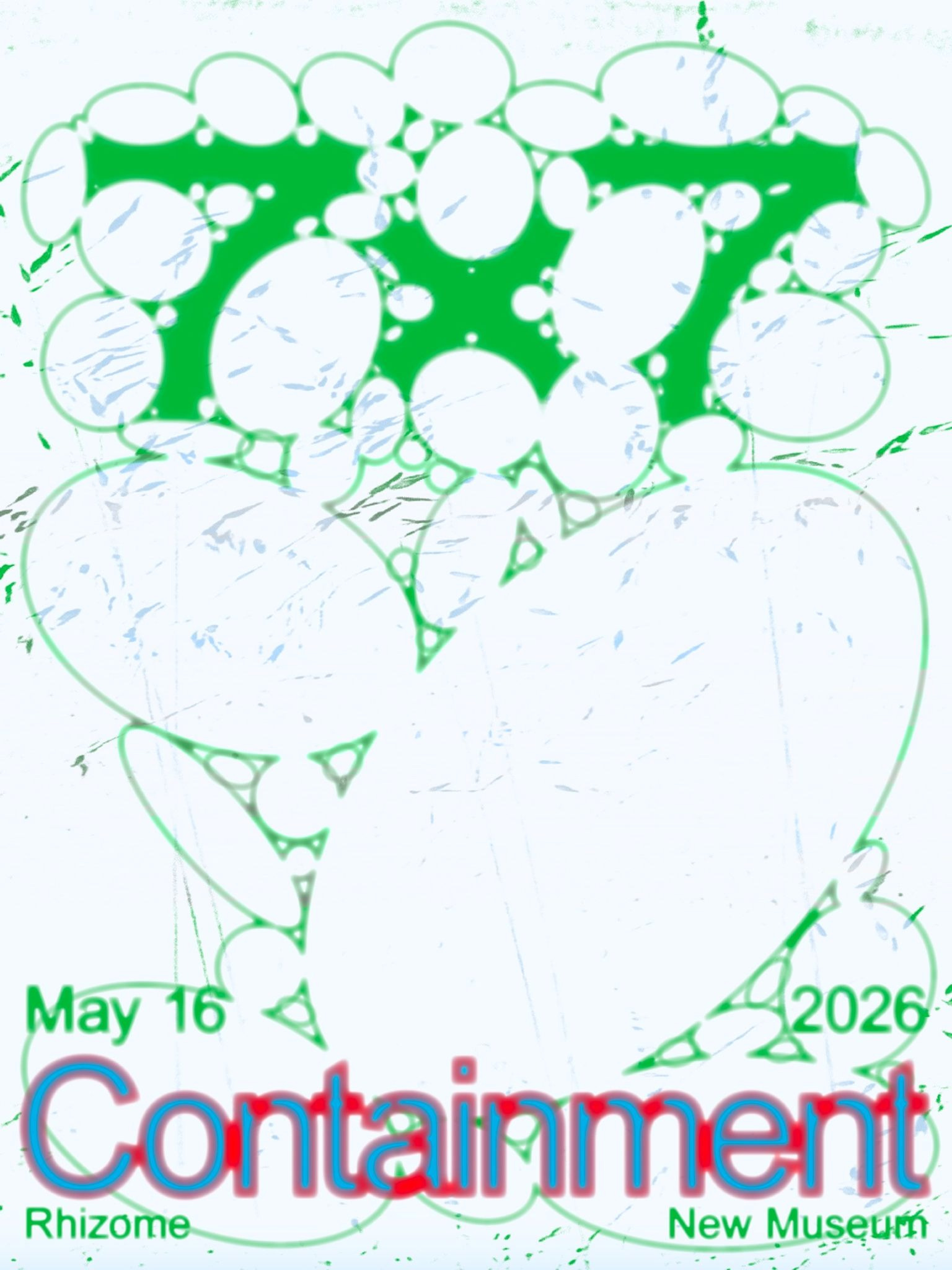
The lineup they’ve put together pulls from synthetic biology, electronic music, simulated environments and AI infrastructure. Dr. Michael Levin, Karyn Nakamura, Stephanie Zhang, Debit, Jenn Leung, and the collective Disintegrator are all on the bill.
I asked Elena what drew them to this particular group.
I’m especially excited to see proposals that bring together biology and computation, projects that open up new operational frameworks for thinking about life and intelligence, such as Michael Levin or Karyn Nakamura. We're really interested in people who can come up with new approaches or frameworks for working, it feels fresh. 7 x 7 enables the creation of prototypes and collaborative creative models that don't quite fit into a single niche. This is what we want to surround ourselves with.
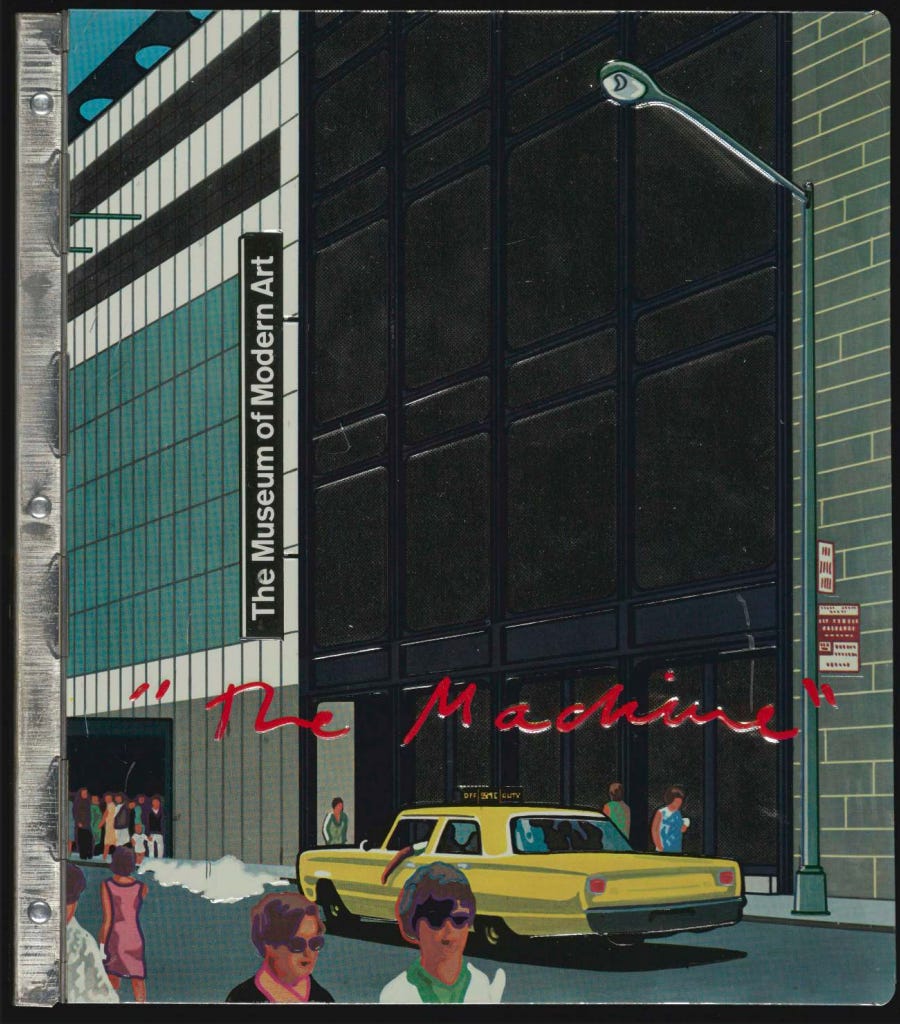
The unusual pairing between artists and technologists at 7x7 is something Rhizome executive director Michael Connor traces back to the 1968 exhibition The Machine as Seen at the End of the Mechanical Age at MoMA. The show incorporated a competition organized with E.A.T. (Experiments in Art and Technology), founded by engineers Billy Klüver and Fred Waldhauer and artists Robert Rauschenberg and Robert Whitman. Nine new artist-engineer works came out of it. That moment over 50 years ago is still the DNA of what 7x7 is today.
Alexandre and Ian each flagged the artists they're watching closest this year.
Particularly excited to see what Stephanie Zhang brings to this edition. To some extent, She works with “life” as a medium. Her work with biofabrication and self-assembling materials explore a completely different ontology of containment. There is emergence within this process…
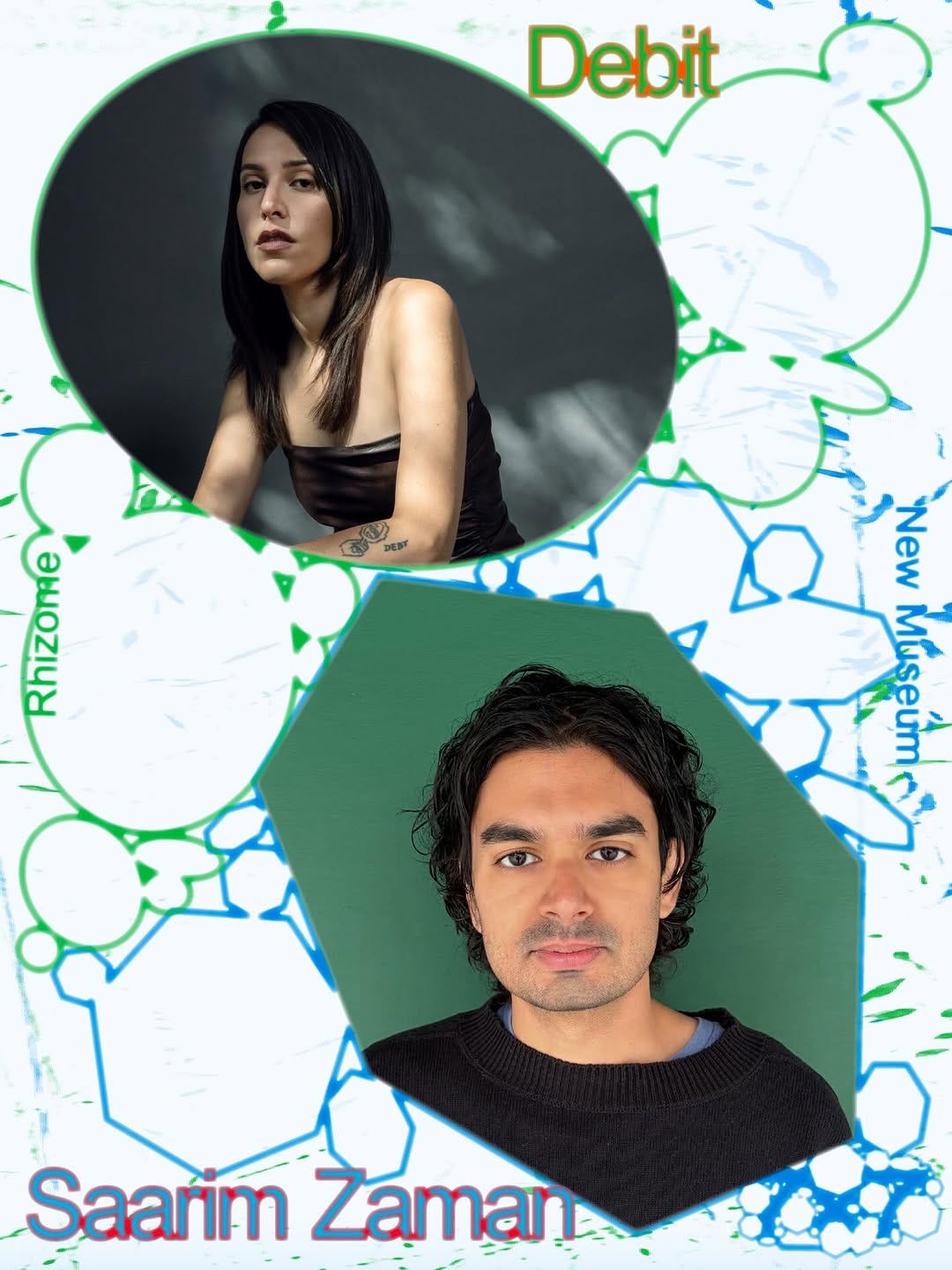
And then, Debit, very curious to witness what she is thinking about for this. What I find genuinely compelling about her direction is the decision to make the agentic structure visible rather than hide it. Let’s get musical, shall we?
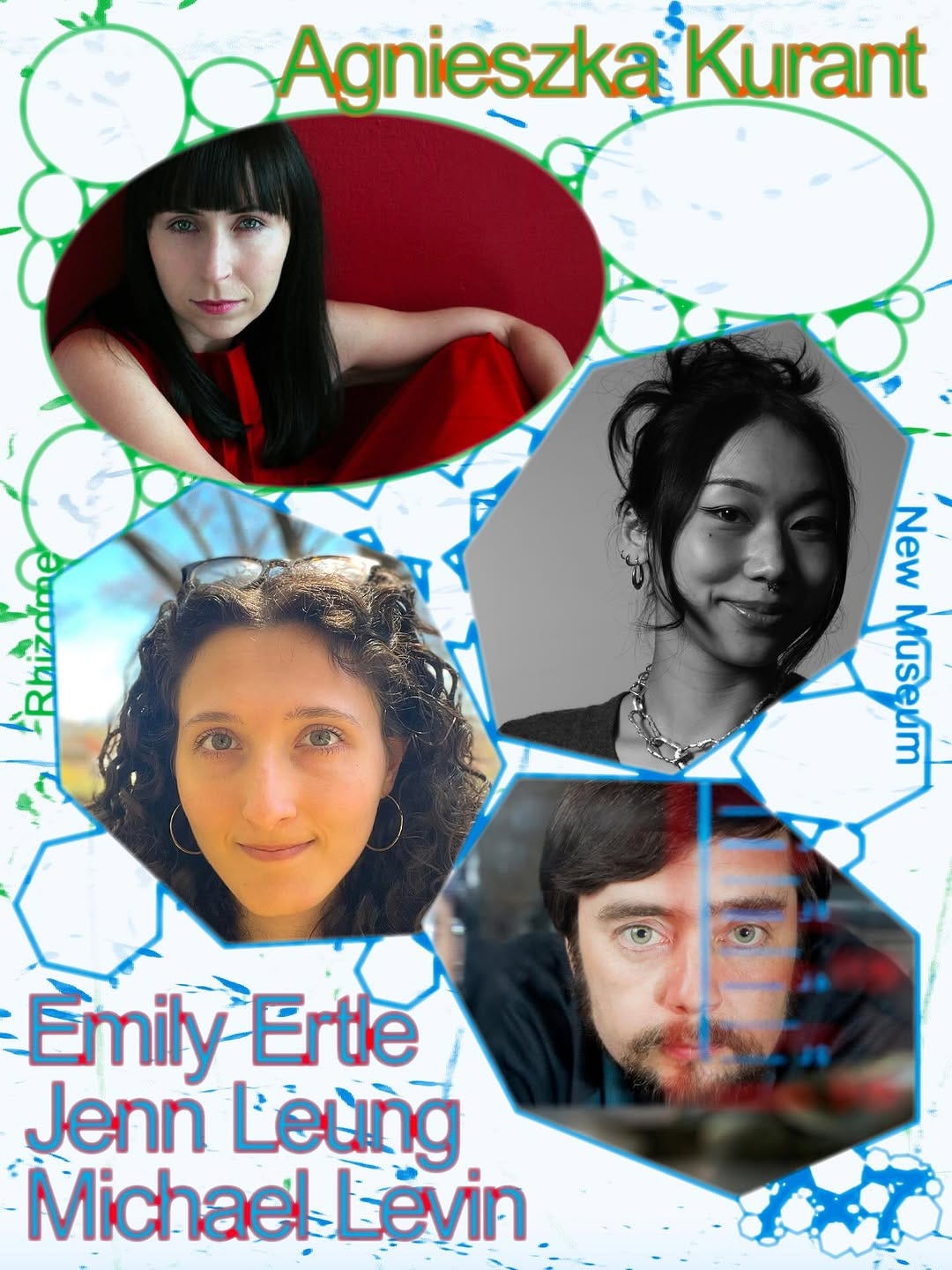
I’m quite excited to see what Jenn Leung, artist and technologist, has to bring to 7x7. We first came across her through Bianjie, after publishing one of her pieces last summer. Her practice constructs simulated, interconnected, real-time environments in which bodies, data, perception, and technical systems coexist long enough to be explored as worlds.
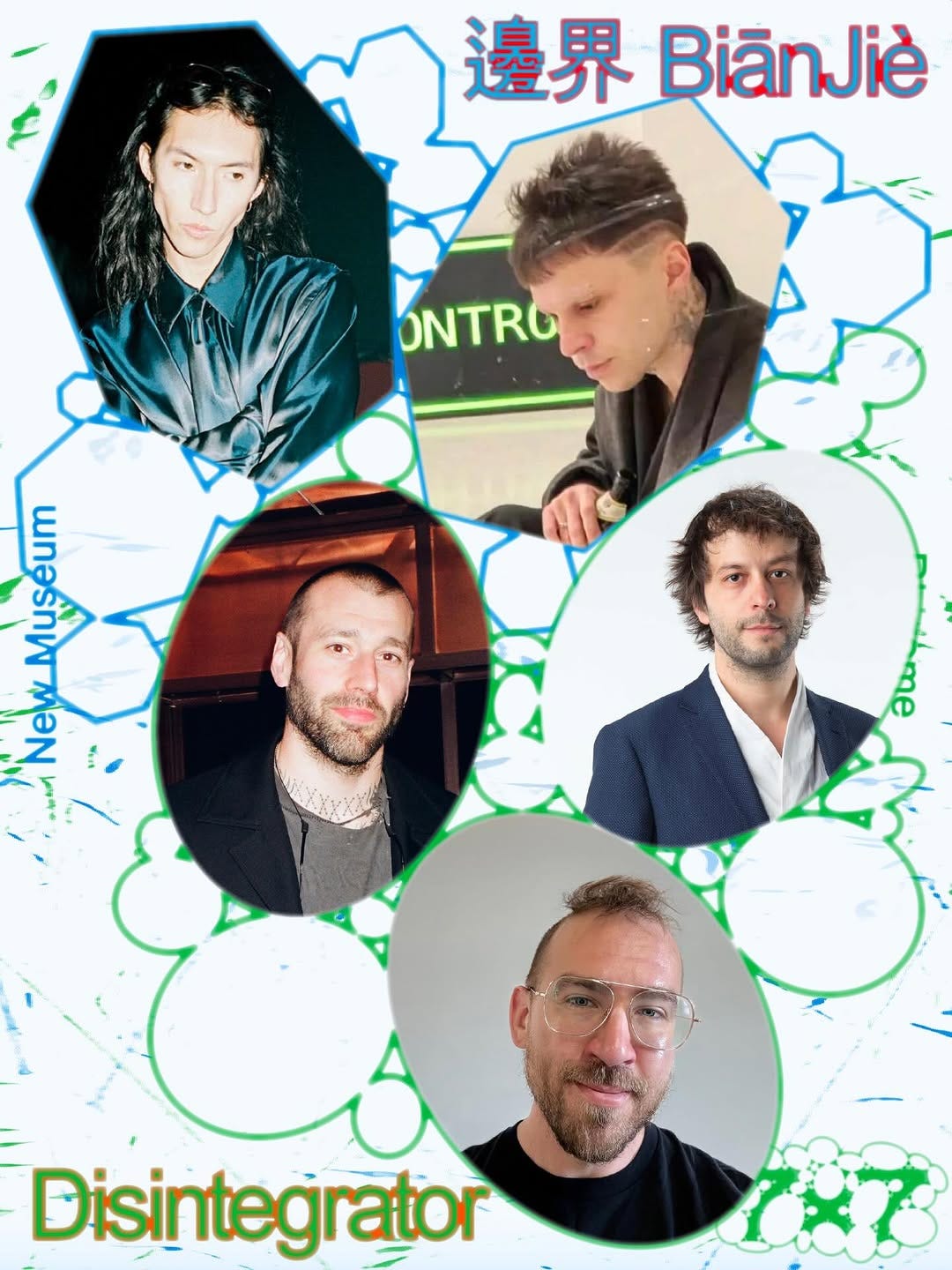
I've been following Disintegrator for a while. The team of Marek Poliks, Roberto Alonso Trillo, Helena Mcfazean, Hugh Scott Douglas and Ruben Banuelos have been at the forefront of equipping people with the critical knowledge to understand what rapid technological changes mean for our lives. The biānjiè team has highlighted them as a source of inspiration from the start.
There's a rigour to how they approach AI as an infrastructural condition. What drew us to them specifically for this project is the way they hold the philosophical and the technical together without collapsing one into the other. Much can be translated from their podcast Disintegrator as well as theory objects such as Exocapitalism.
– biānjiè.systems on Disintegrator
As for what biānjiè themselves are presenting at 7x7, they kept it close but dropped a hint.
We’re currently developing a generative project that uses silicon as a material substrate to explore questions of inscription, legibility and scale, investigating how information can be contained, concealed, and rearticulated through recursive structures and processes of reading that exceed immediate human perception
– biānjiè.systems
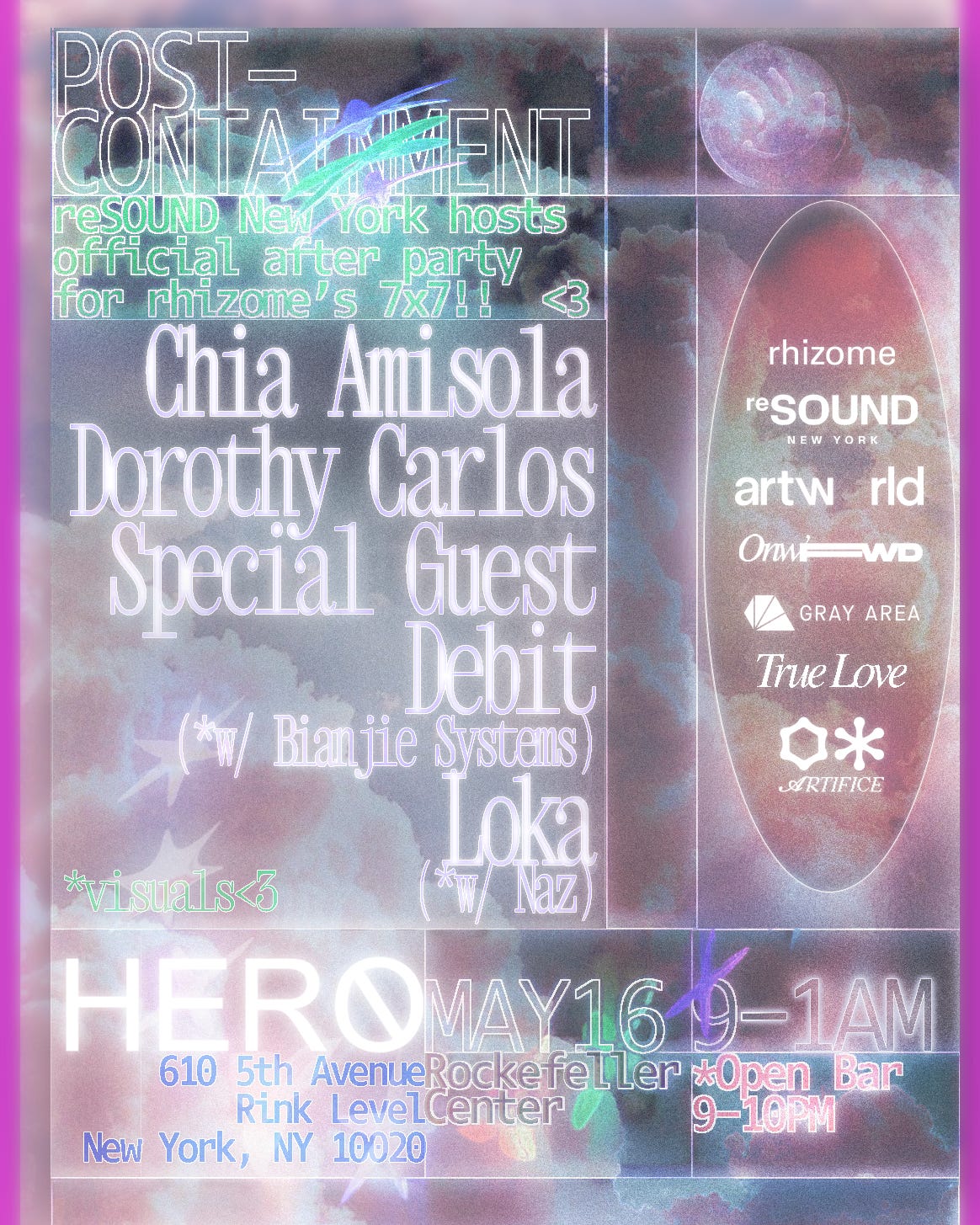
I’ll be there on Saturday to find out what exactly they've been building. Tickets are available here. There’s also an afterparty at Rockefeller Center with spillover collaborations. See you all there.
Date: Saturday, May 16th
Location: The New Museum, New York
Afterparty: Rockefeller Center, 610 5th Avenue, 9PM-1AM (open bar 9-10PM)
Tickets: rhizome.itm.studio
In The Moment is published by the team behind ITM, the operating system for real-world experiences — ticketing, guest lists, check-ins, and commerce in one place. Send us an email at founders@itm.studio to learn more.
 | A guest post by
|